

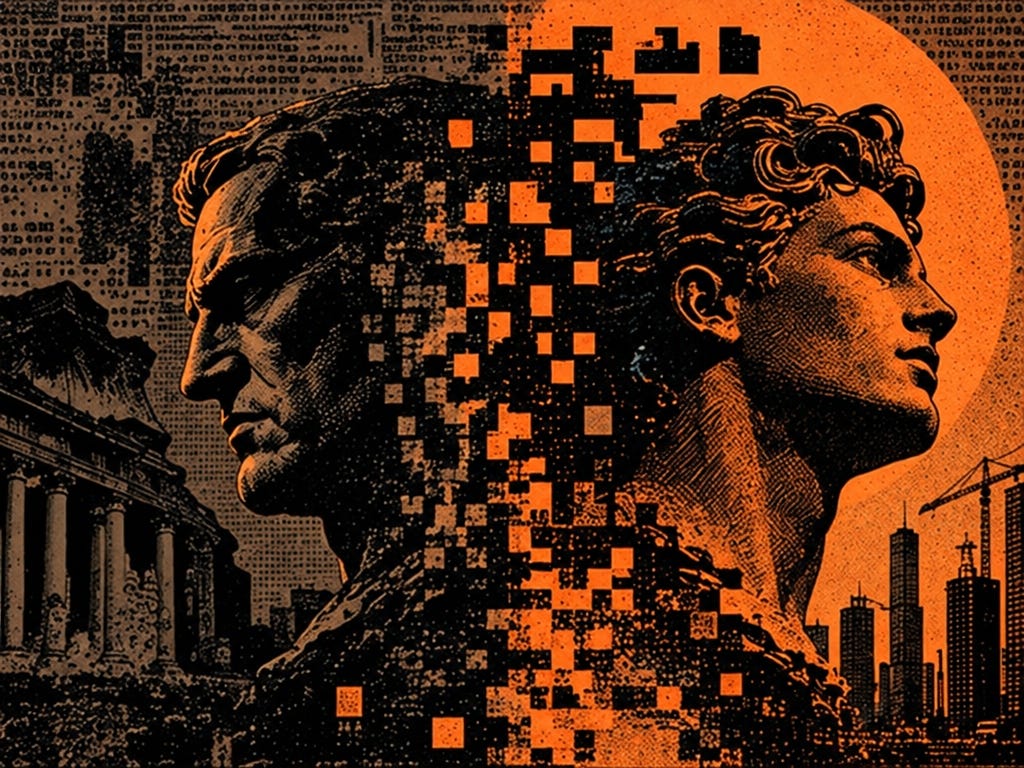
One thing we’ve seen in Bitcoin as it grew bigger was that people respond, instinctively, against the cultural accretions that come with size. “Bitcoin Core is monolithic”. Bitcoin’s quick success brought money and power — at least perceived power — and big companies or groups (Blockstream was the first such) triggered understandable suspicion.
Much of that response is misjudged, inasmuch as Bitcoin is an open project. But in at least subtle ways the suspicion and the reaction are justified. Bitcoin is not a corporation, but like one, it becomes more and more difficult for established processes to change, even when they don’t make much sense. Very concretely, it can be things like established protocol rules: the max block size, or which opcodes are enabled or disabled, whether it’s OP_RETURN or OP_CAT. People get angry about them existing, or about them not existing. People get frustrated that simple changes don’t happen.
The reactionary response
In the famous “blocksize wars” of 2015–2017 you saw the first really strong example of what I would call the reactionary response. From 2026 it’s not so easy to see, but it was in many ways as much an anti-segwit and anti-Lightning movement as it was a movement for cheap payments through bigger blocks. (If you wanted cheap payments, many of us argued at the time, you should emphatically have been supporting segwit as the path to Lightning.)
Why reactionary, specifically? Because it was an anti-complexity, anti-sophistication position: KISS is how many of the big blockers saw it. The sophisticated segwit approach was seen as a typical top-down solution, using the kinds of long, complicated rulesets favored by bureaucrats and big corporations — “the man”. So much of that was nonsense, but it was the gut reaction: the ordinary people wanted freedom; the people at the top wanted complex rules that would take power away from the people.
That exact same reaction repeats. Recently it was seen in the idea that the priest class of engineers was giving in to corporate overlords, letting data take precedence in the blockchain. That led to what is best described as a purity cult, which metastasized into BIP110 — a “temporary” data-restricting soft fork that, with about 2.5% of miners signaling, split off a minority chain on 8 August 2026 that mined two blocks and stalled — and then, on 1 September, into an outright proof-of-work hardfork to BLAKE2b, explicitly to “fire the miners”. It was far less logical, in my view, than the big block position, but it had the same animus: an elite is trying to control us and remove the simple goodness of what Bitcoin is. It was not revolutionary; it was reactionary.

The revolutionary response
So, what about the revolutionary, then? Consider the original cypherpunk ideas; they were revolutionary, but more in the sense of subversive. The aim was never to overthrow the government — at least not directly! It was to render the rules of the leaders less relevant, or even irrelevant, through the power of cryptography. That’s what was behind remailers, strong encryption for messages, and the tentative first steps towards online cash systems. They can’t stop, block or tax what they can’t see.
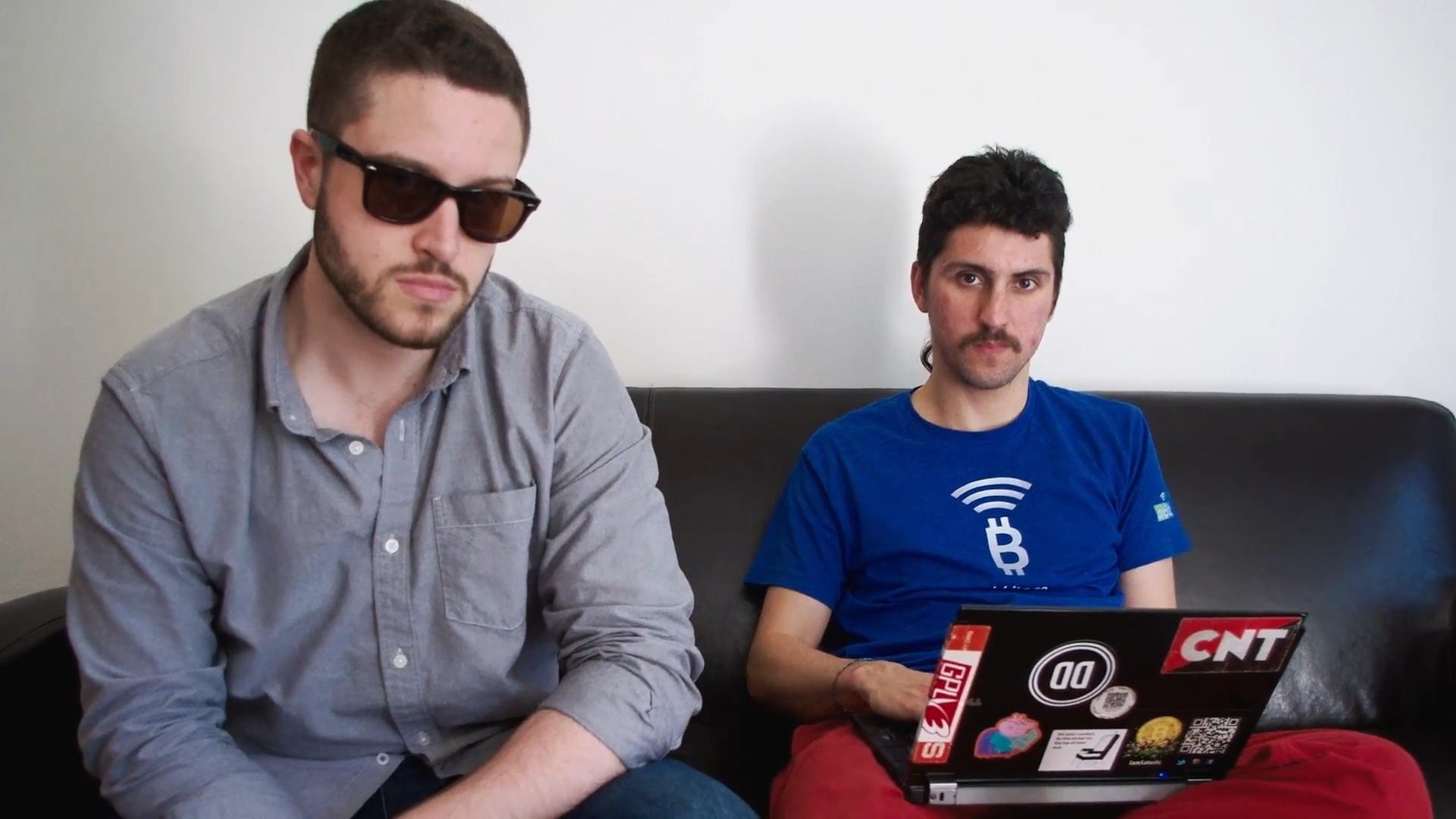
That same spirit was alive and well in early Bitcoin, among anarchists of various stripes... Ulbricht was perhaps the most famous example, but Cody Wilson and Amir Taaki (Taaki built Dark Wallet in 2013–14, with Wilson as its public face) in particular, was perhaps the best example. The revolutionary streak fragmented. Most of them ended up drifting away from Bitcoin towards other cryptocurrency (or just, other) projects, because they perceived Bitcoin as too restricted a space in which to play out their political goals.
It’s probably no accident that it was around the time these people drifted off into Ethereum, Monero, Zcash and other side projects that Bitcoin became a fight between the more neutral engineers and the more reactionary “KISS” bitcoiners led by Roger Ver. What united people like Ver and Taaki, though, was that both saw Bitcoin as too much like a conservative power structure that wasn’t open to change because it had been “co-opted”. They saw stagnation.
Where the revolution lives now
The subversive revolutionary vision of Bitcoin still exists, but almost no one is paying attention.
After attending bitcoin++ Seoul, the privacy edition, earlier this month, I was drawn to reflect on the fact that the vast majority of active work is — rather like work in corporations — erudite work on the details: complex mempool management like TRUC and the like; the extreme subtleties of better versions of multisig, backup, stealth addresses (now Silent Payments), coinswap; details of payjoin and other coinjoin variants; signature aggregation. Many of the ideas being refined are over a decade old. The only areas where serious change is contemplated by most are either an existential threat like quantum, or serious proposals to revamp script (GSR, Simplicity) which are — precisely because of stagnation — almost incredibly slow processes with hard-to-find endpoints.
Yes, it’s easy to look at the hard work and say “meh, boring” and yes there’s tremendous value in getting the plumbing right. But life isn’t just plumbing.
So where does the revolutionary still exist? I claim it lives neither in trying to make changes to Bitcoin itself (new opcodes etc.), nor in editing the finer details of what already exists, but separate from all this: in cryptography.
Listen to Robin Linus, one of the best talents in the field nowadays, and his “I’m in it for the money” quip about Bitcoin. The revolutionary thing today is exactly that: to focus on Bitcoin as a usable form of money that is censorship resistant. I have just given a talk in Korea to non-technical people, and it’s telling that I thought it worth making most of my talk about that idea — that you can actually use Bitcoin to pay for things!
But I mention people like Linus, and Liam Eagen, and many other super-inventive and smart thinkers, especially in the context of cryptography, because I think the revolutionary spirit of Bitcoin is now intricately tied to the idea that we can now do things with cryptography that we couldn’t do before.

What cryptography can do now
Wondering what I mean? Take maybe the key figure connecting the cypherpunks to Bitcoin: Hal Finney. In a rump session from Crypto ‘98, he proposed the insanely radical idea: that you could make a zero-knowledge proof of knowing a hash preimage (SHA-1, in his case). His implementation needed about 40 minutes of precomputation on a 200 MHz Pentium, and then about 100 seconds to run the protocol. As late as, say, 2019–2021 this was still an exotic thing to try to do. In 2026, proving knowledge of a SHA-256 preimage takes about a tenth of a second on laptop-class hardware (Binius: 103 ms for a 2 KB input on an Apple M1).

This is just one of many things that are ridiculously easy to do today that were essentially impossible when people discussed them on bitcointalk in 2013 (see Greg Maxwell’s CoinWitness and CoinCovenants threads from August 2013, and his Zero Knowledge Contingent Payments post that December). With the power of cryptography we can do incredible things off the blockchain that can control bitcoin, both onchain and offchain. See BitVM, BitVM2, BitVMX, Glock, BABE, PIPEs v2. Most of these are not practical today, but they are getting damn close. Or see my recent Lichen project, which makes some tradeoffs but can be done today without a crazy performance overhead, largely thanks to the cleverness of Glock and BABE.
A call to arms
It’s no accident that most of these projects — almost all, in fact — are being designed without needing new opcodes. Sure, they might benefit from them, but this is the revolutionary, cypherpunk idea: don’t try to overturn the institution; make it irrelevant. If Bitcoin is ossified, fine. So is TCP, for that matter. We work on a new level, a new paradigm.
So consider this a call to arms. Don’t get lost in either the reactionary “take down the institution, smash it and build a virtuous new one”, or the “I will join the institution and work on some tiny corner of it for ten years, hoping for an incremental change”. Dare to dream a little bigger. What if ecash could be designed without custody? What if you could play a card game with the result adjudicated on the blockchain? What if you could set a bounty on deanonymizing someone’s coinjoin outputs paid out trustlessly if you succeed? What if you could make decentralized exchanges of anything denominated in bitcoin? Be genuinely subversive:
Use cryptography.
References
Jonathan Bier, The Blocksize War (2021) — covers August 2015 to November 2017.
BIP141: Segregated Witness; Poon & Dryja, The Bitcoin Lightning Network.
BIP110 and its aftermath: BIT Academy explainer; ForkLog on the 8 Aug 2026 split; BeInCrypto on the 1 Sep 2026 BLAKE2b hardfork.
Eric Hughes, A Cypherpunk’s Manifesto (1993).
Bitcoin Magazine, Shedding Light on the Dark Wallet (2014).
BIP431: TRUC transactions; BIP352: Silent Payments; BIP77: Async payjoin.
Rusty Russell, BIP441: Restoration of disabled script (Great Script Restoration); Simplicity.
Hal Finney, “A zero-knowledge proof of possession of a pre-image of a SHA-1 hash”, Crypto ‘98 (transcript). Greg Maxwell, bitcointalk 2013: CoinWitness, CoinCovenants using SCIP signatures, Zero Knowledge Contingent Payments.
PSE Client-Side Proving team, Benchmarks Report Q1’26; live data at ethproofs.org/csp-benchmarks.
Robin Linus, BitVM: Compute Anything on Bitcoin (2023); BitVM2; BitVMX via Bitcoin Optech (May 2024); Bitcoin Magazine interview, “BitVM Creator Explains: This Breakthrough Will REVOLUTIONIZE Bitcoin” (Jul 2025).
Liam Eagen, Glock: Garbled Locks for Bitcoin (2025); Garg, Kolonelos & Sergeevitch, BABE (2026); Abdalla et al., Bitcoin PIPEs v2 (2026).
Adam Gibson, Lichen, as summarized in Bitcoin Optech #428.